Understory mulching
Process brush, saplings, and woody understory beneath retained trees.
Forestry mulching in Spokane County
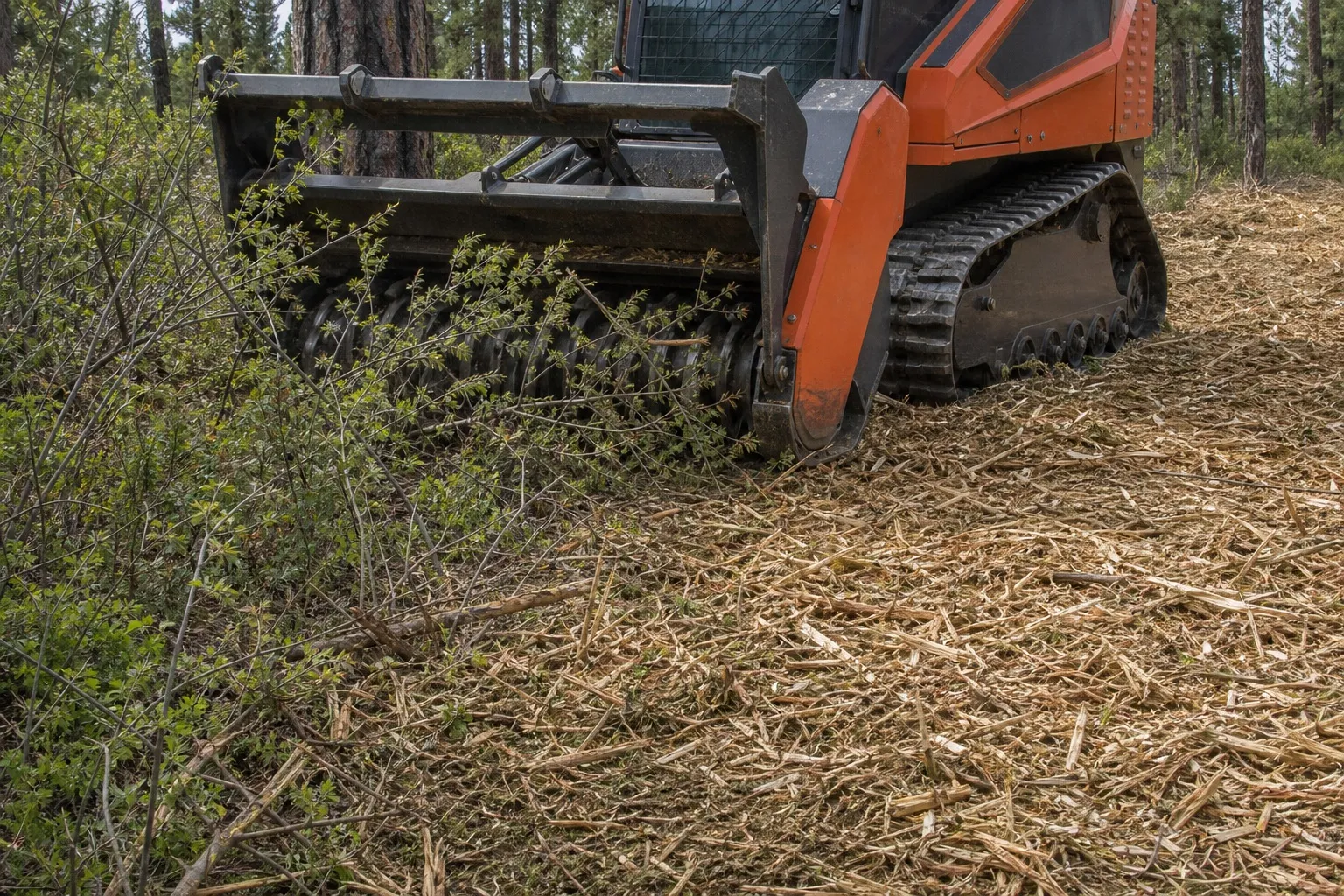
Mulching processes vegetation where it stands, leaving a manageable ground layer and avoiding a separate pile, burn, and haul cycle on suitable sites.
Scope
Forestry mulching is useful when the goal is to reduce dense vegetation while keeping roots and much of the soil structure in place.
Process brush, saplings, and woody understory beneath retained trees.
Open overgrown portions of a property for safer access, inspection, and future maintenance.
Break up dense horizontal and vertical vegetation that can carry fire across a site.
Reopen overgrown routes without defaulting to full excavation and grading.
Local conditions
Slope, rock, soft ground, tree spacing, overhead clearance, access width, and material diameter all affect whether mulching is the right method for a Spokane property.
How the work takes shape
We check gates, routes, slopes, utilities, soft ground, and the space needed to operate safely.
Retained trees, buffers, and sensitive areas are identified before production work begins.
Suitable brush and woody growth are reduced in place and distributed across the treated area.
We walk the result, check depth and access, and discuss follow-up needs.
Project fit
Estimate variables
Common questions
It generally treats above-ground vegetation and leaves many root systems in place. That is one reason it can disturb soil less than grubbing or full excavation.
No. Machine size, attachment capacity, species, diameter, condition, slope, and retained-tree spacing all matter. Larger or hazardous trees may need a different removal method.
Processed material is typically spread over the treated ground. Final depth and distribution depend on how much vegetation was present and the intended use of the area.
Start with the property
A useful estimate begins with the vegetation, access, and outcome you have in mind.
Request a site visit