Small-tree thinning
Remove selected suppressed, crowded, or poorly placed small trees according to the site plan.
Wildfire fuel reduction in Spokane County
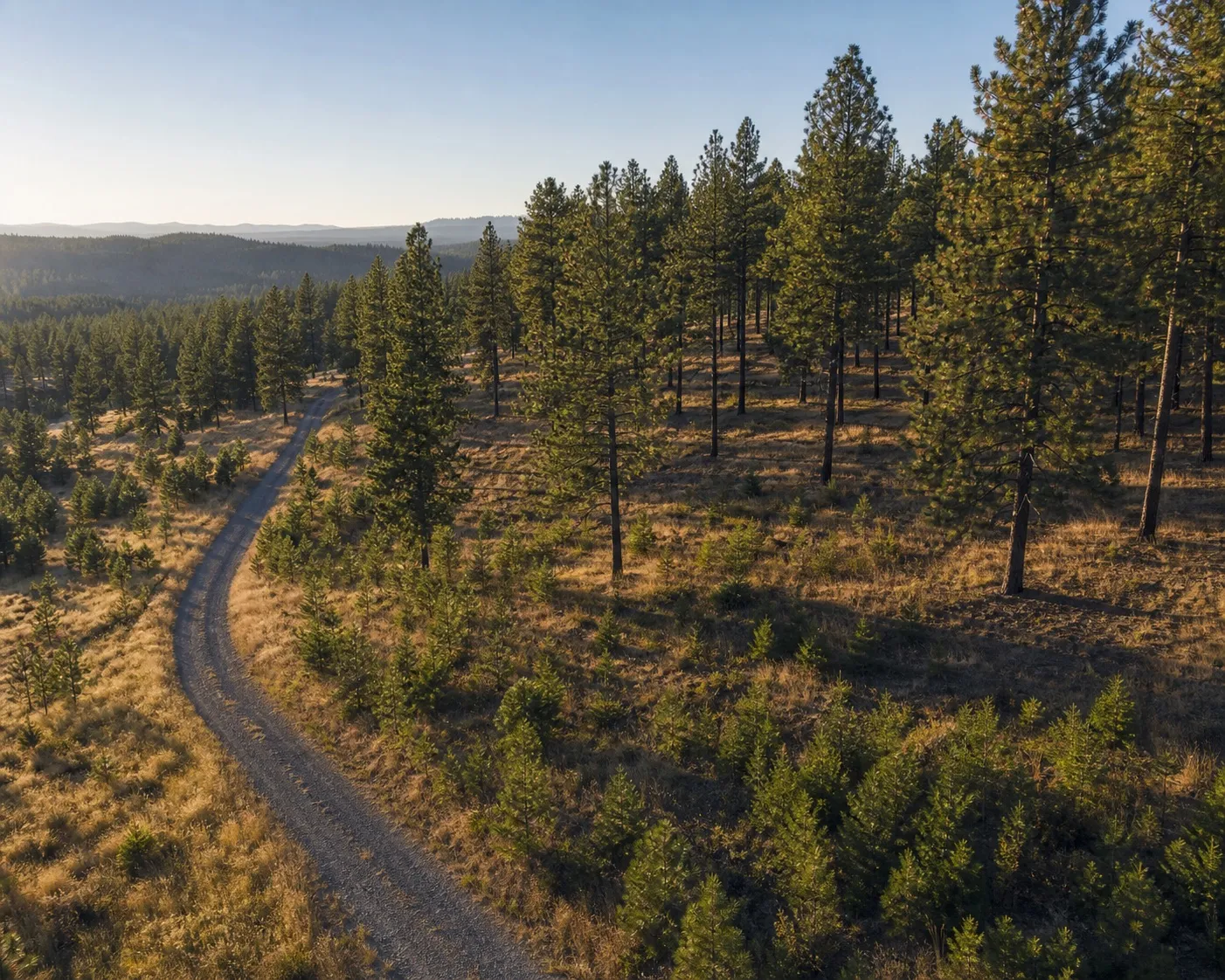
Selective treatment can reduce continuous brush, crowded small trees, dead material, and low branches while retaining healthy mature trees.
Scope
Fuel reduction is selective. The objective is better spacing, fewer pathways into tree crowns, cleaner access, and a property that is easier to maintain.
Remove selected suppressed, crowded, or poorly placed small trees according to the site plan.
Reduce vegetation that connects surface fuels to lower branches and tree crowns.
Address downed limbs, dead brush, slash, and other accumulated woody fuel within the work area.
Raise lower limbs and create practical separation where tree health and conditions allow.
Local conditions
A south-facing grass slope, a dense draw, and a shaded ponderosa stand do not need identical treatment. We define work zones instead of applying one prescription everywhere.
How the work takes shape
We review density, species, condition, slope, structures, and access.
The scope identifies what stays, what comes out, and why.
Selected trees, brush, lower limbs, and debris are treated using the agreed methods.
We discuss regrowth, needles, grass, and the likely maintenance cycle.
Project fit
Estimate variables
Common questions
Fuel reduction is selective and focused on breaking up combustible vegetation. Land clearing is usually broader and tied to development, access, or a new use for the property.
No treatment can eliminate wildfire risk. The goal is to reduce obvious fuel continuity and improve the condition and manageability of the property.
Sometimes. Mulching, chipping, stacking, or limited redistribution may be appropriate. The amount and final treatment depend on site conditions and the project objective.
Start with the property
A useful estimate begins with the vegetation, access, and outcome you have in mind.
Request a site visit