Dead and declining trees
Remove selected trees where condition and location make them part of the project risk.
Tree removal in Spokane County
We address selected trees that create a clear conflict with structures, access, retained-tree health, or the agreed fuel-reduction plan.
Scope
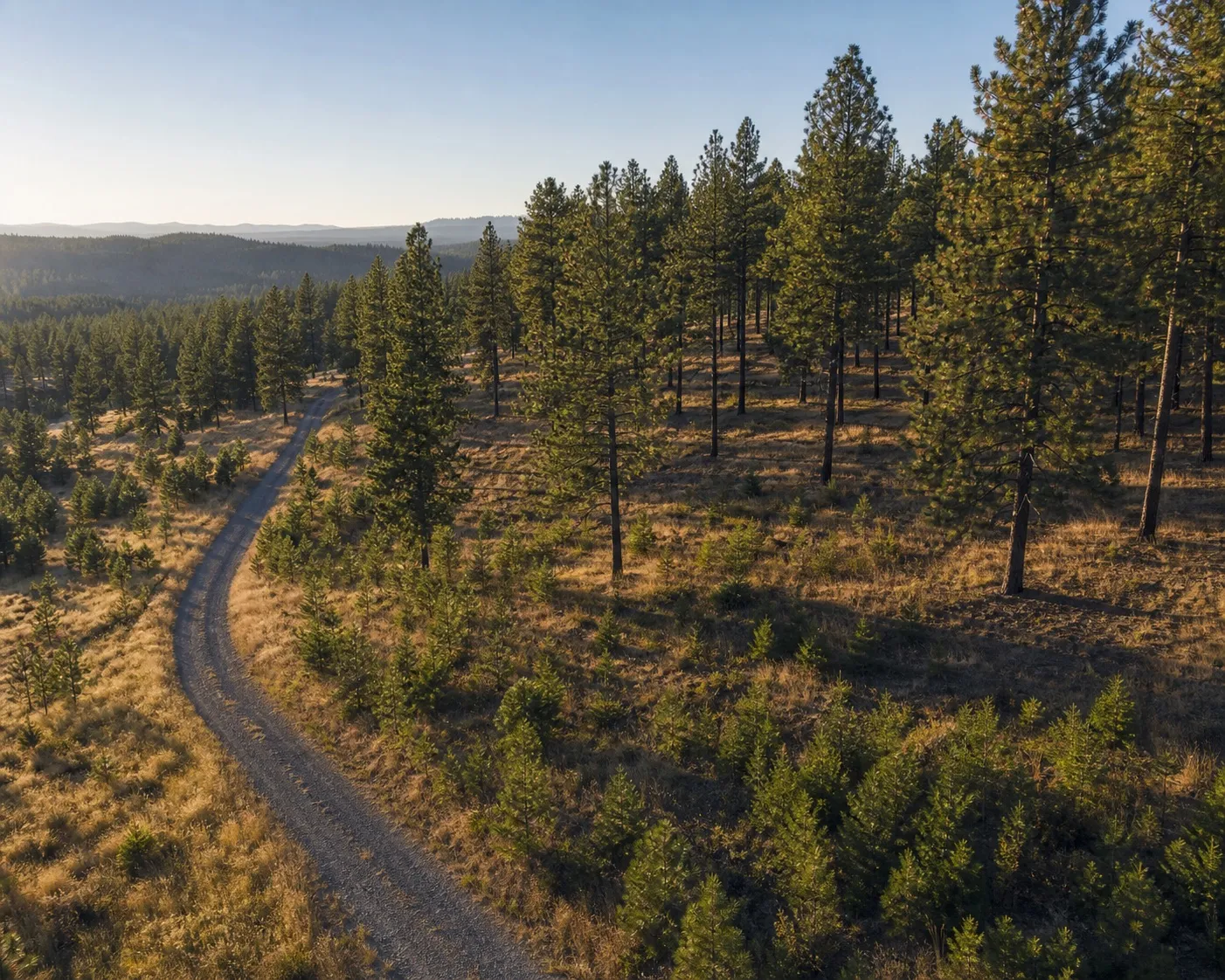
The objective is not to take every tree. We identify the trees that conflict with the treatment plan and use the right removal approach for their size, condition, and surroundings.
Remove selected trees where condition and location make them part of the project risk.
Thin selected smaller trees to improve spacing around retained stems.
Address trees in direct conflict with a home, outbuilding, driveway, or planned work zone.
Define how logs, limbs, slash, and chips will be processed, stacked, used, or hauled.
Local conditions
Large trees near structures, utilities, roads, or neighboring property can require technical rigging or utility coordination. We identify those constraints during the site visit and define the appropriate scope.
How the work takes shape
We review why the tree is being considered and what is around it.
Size, lean, condition, drop zone, targets, and access determine the approach.
The tree and resulting material are handled according to the agreed scope.
We check spacing, debris, access, and the condition of the work area.
Project fit
Estimate variables
Common questions
No credential is implied by this page. If a project needs a certified arborist assessment or a specialized technical removal, that requirement should be identified before work is scheduled.
Stump treatment is defined separately in the project scope. Options depend on access, future use, equipment, and whether the stump can remain.
Yes, when practical and agreed in advance. Logs may be cut to usable lengths, stacked, chipped, or hauled depending on the site and project goals.
Start with the property
A useful estimate begins with the vegetation, access, and outcome you have in mind.
Request a site visit